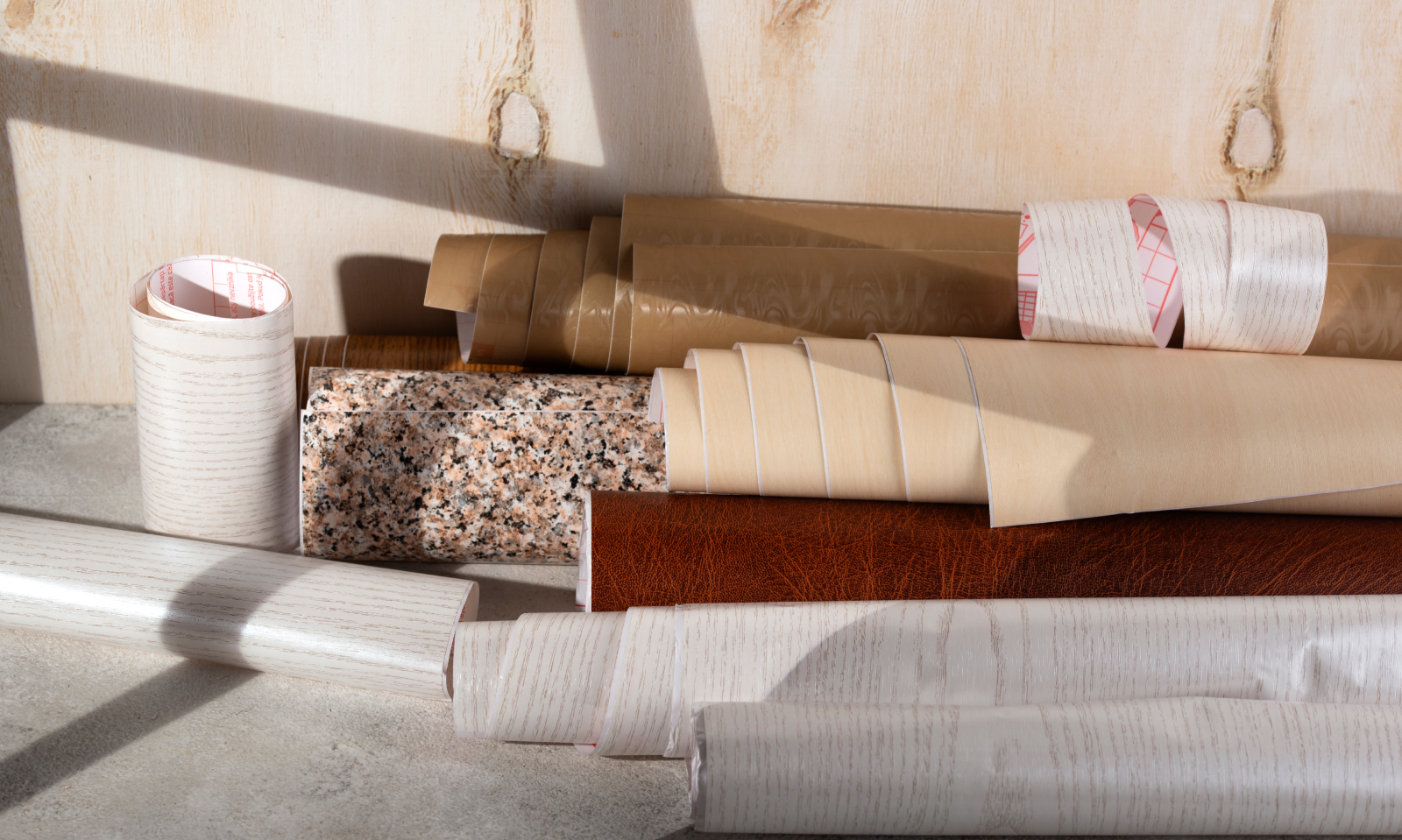
When you step into a beautifully designed room, what is the first thing you notice? Is it the color of the walls, the shine of the kitchen cabinets, or the warmth of the wooden flooring? While furniture and layout are essential, the true soul of any home lies in its interior design finishes. The materials you choose don’t just define the look of your home; they dictate its durability, maintenance requirements, and how it responds to the unique coastal climate of Chennai.
At D2M Interiors, recognized among the best interior designers in Chennai, we believe that selecting the right materials is a blend of science and art. Whether you are moving into a new apartment or planning a complete overhaul of your current residence, understanding the vast array of types of interior materials available is the first step toward a successful transformation.
Why Material Choice Matters in Modern Design
The selection of materials and finishes in interior design is a strategic decision. In a humid city like Chennai, materials must be resistant to moisture and heat. Beyond aesthetics, the tactile experience—how a surface feels to the touch—plays a huge role in the comfort of your home.
From the reflective brilliance of acrylic to the grounded, earthy feel of natural stone, every choice sends a message. For homeowners looking for a structured approach to these selections, exploring our interior design packages in Chennai can provide a clear roadmap of how high-quality materials can be integrated into your home while staying within your desired budget.
Exploring the Core Types of Interior Materials
1. High-Pressure Laminates (HPL)
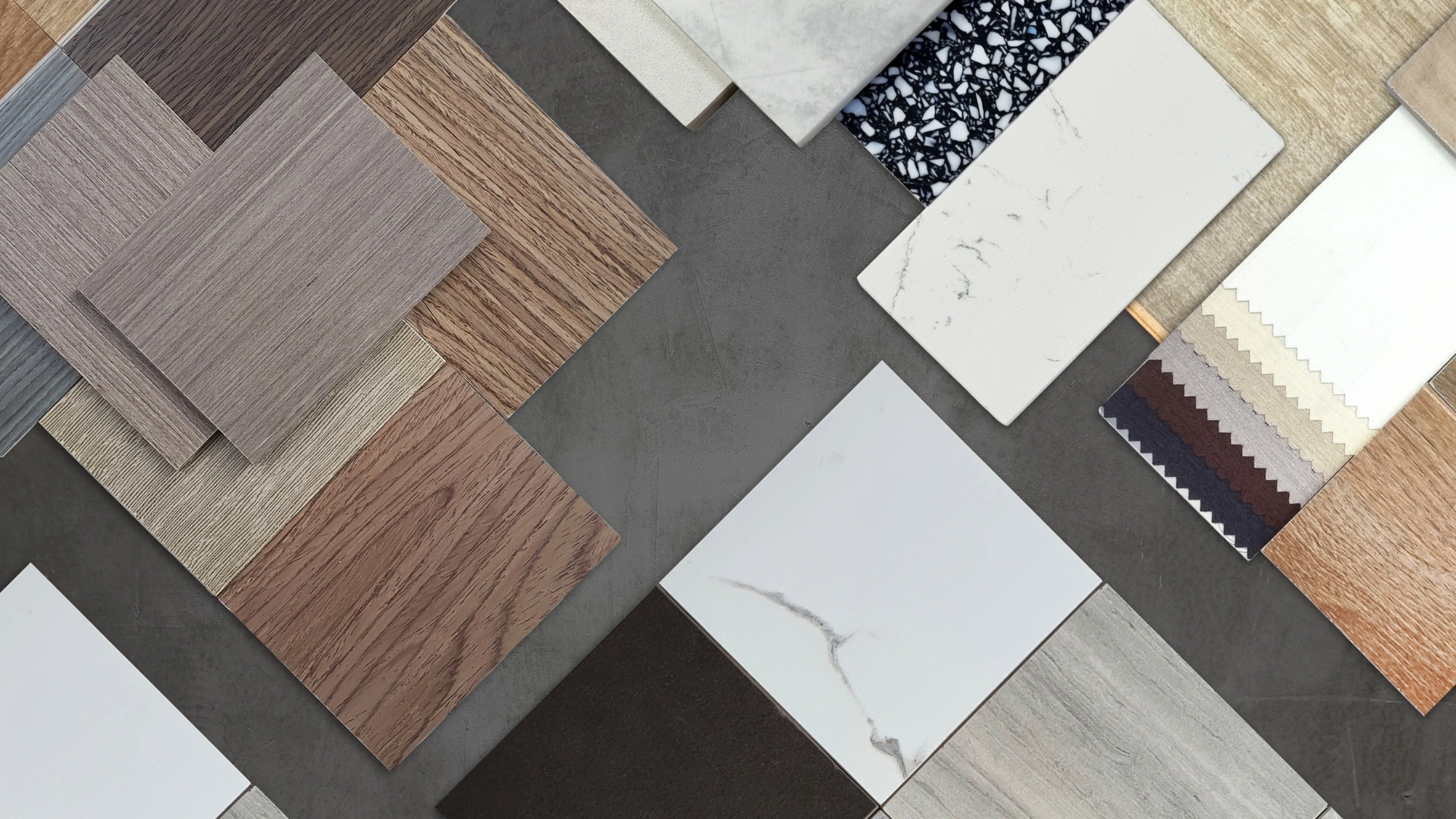
Laminates are perhaps the most versatile and widely used interior finishing materials in India today. They consist of multiple layers of resin-impregnated paper pressed under high heat.
- Matte Laminate: This finish is a favorite for those who prefer a subtle, sophisticated look. It is excellent at hiding fingerprints and smudges, making it the perfect choice for the interior designers in Chennai for flats where daily wear and tear are common.
- Glossy Laminate: Offering a high-shine surface, glossy laminates make a bold statement. They are particularly effective in smaller rooms as they reflect light, giving the illusion of a more expansive space.
2. The Luxury of Acrylic Finishes
If you are aiming for a mirror-like, ultra-glossy appearance, acrylic is the gold standard. Unlike glossy laminates, acrylic provides a perfectly smooth, non-porous surface that doesn’t lose its luster over time. It is highly resistant to UV rays, which is a significant advantage in sun-drenched Chennai homes. While it is a premium choice, its ability to elevate the luxury quotient of a modular kitchen or a master bedroom is unparalleled.
3. Natural Wood Veneers
For homeowners who crave the authentic warmth of wood, veneers offer a sustainable and cost-effective alternative to solid timber. A veneer is a thin slice of real wood glued onto a sturdy base like plywood or MDF. Because it is real wood, every sheet has a unique grain pattern, ensuring that your furniture is one-of-a-kind. Our expert interior designers in Chennai for villas often recommend veneers to add a touch of timeless elegance and organic texture to large-scale living spaces.
Specialized Material Finishes in Interior Design
4. PU (Polyurethane) Coating
PU finish is a high-performance liquid coating that can be applied to almost any surface, including wood, metal, and plastic. It is available in a spectrum of finishes, from dead-matte to high-gloss. PU is incredibly durable and creates a seamless, royal finish that is highly resistant to water, heat, and household chemicals. This makes it a preferred material finishes interior design choice for high-end cabinetry and decorative wall panels.
5. Membrane Foil Finishes
A membrane finish is achieved by wrapping a PVC foil around MDF boards using a vacuum press. This process creates a seamless edge-to-edge finish that is remarkably soft to the touch and highly water-resistant. It is often a key component in a home renovation in Chennai because it allows for intricate carvings and grooved designs that are difficult to achieve with standard laminates.
6. Lacquer and Varnish
- Varnish: This is a hard, transparent protective film that highlights the natural beauty of the material underneath while preventing decay from moisture or UV damage.
- Lacquer: Applied via a high-pressure sprayer, lacquer provides an incredibly tough, high-luster finish. It is often used in contemporary furniture design to provide a “factory-perfect” look that is resistant to scratches and chips.
Trends in Interior Finishing Materials for 2024
As design evolves, so do the materials we use. We are seeing a shift toward more tactile and eco-friendly interior finishing materials.
- Leather and Fabric Finishes: Incorporating padded leather or textured fabric panels on wardrobe doors or bed headboards adds a layer of acoustic comfort and visual softness.
- Natural Stone and Marble: While traditionally used for flooring, these materials are now finding their way onto wall claddings and TV units, bringing a sense of permanence and grandeur to the home.
- Metallic Accents: Branded rose gold, brushed brass, and matte black hardware are being paired with neutral-toned finishes to create a “modern-industrial” aesthetic.
Room-by-Room Material Strategies
Choosing the right material finishes interior design depends heavily on the room’s function:
The Kitchen: Durability is King
The kitchen is a high-moisture, high-heat zone. Here, we recommend a mix of acrylic for upper cabinets (to reflect light and stay clean) and high-quality laminates or PU for lower cabinets (to withstand heavy use). Quartz countertops remain the top choice for their non-porous, stain-resistant nature.
The Living Room: Aesthetics and Comfort
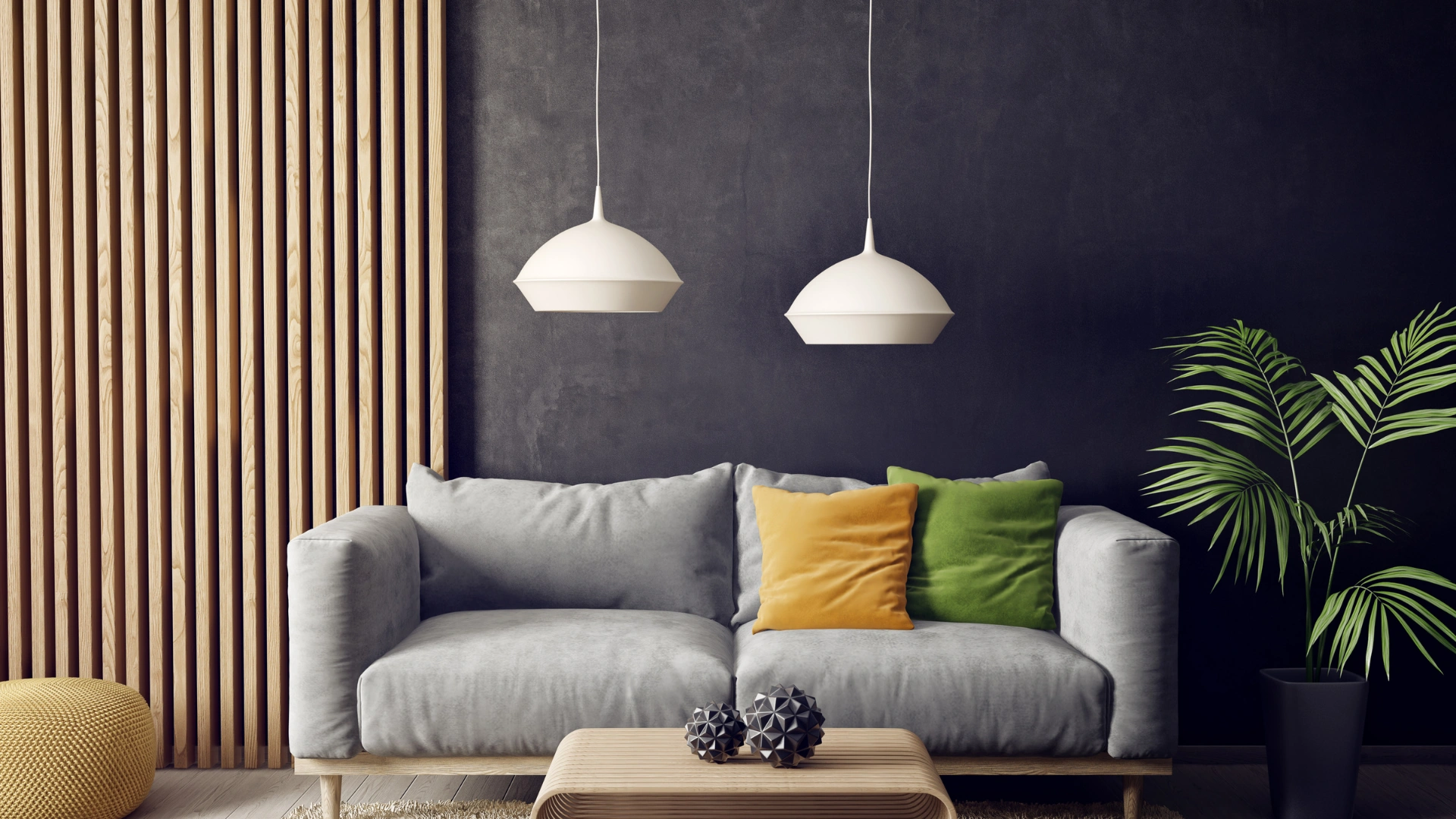
The living room is where you showcase your style. Using a combination of wood veneers for wall panels and matte paints for the walls creates a balanced, grounded environment.
The Bedroom: Softness and Relaxation
In the bedroom, the focus shifts to tactile comfort. Matte finishes, fabric claddings, and warm wood textures are ideal for creating a serene environment that promotes rest.
By consulting with the best interior designers in Chennai for homes, you can ensure that the transition between these spaces feels cohesive and well-planned.
Maintaining Your Interior Materials
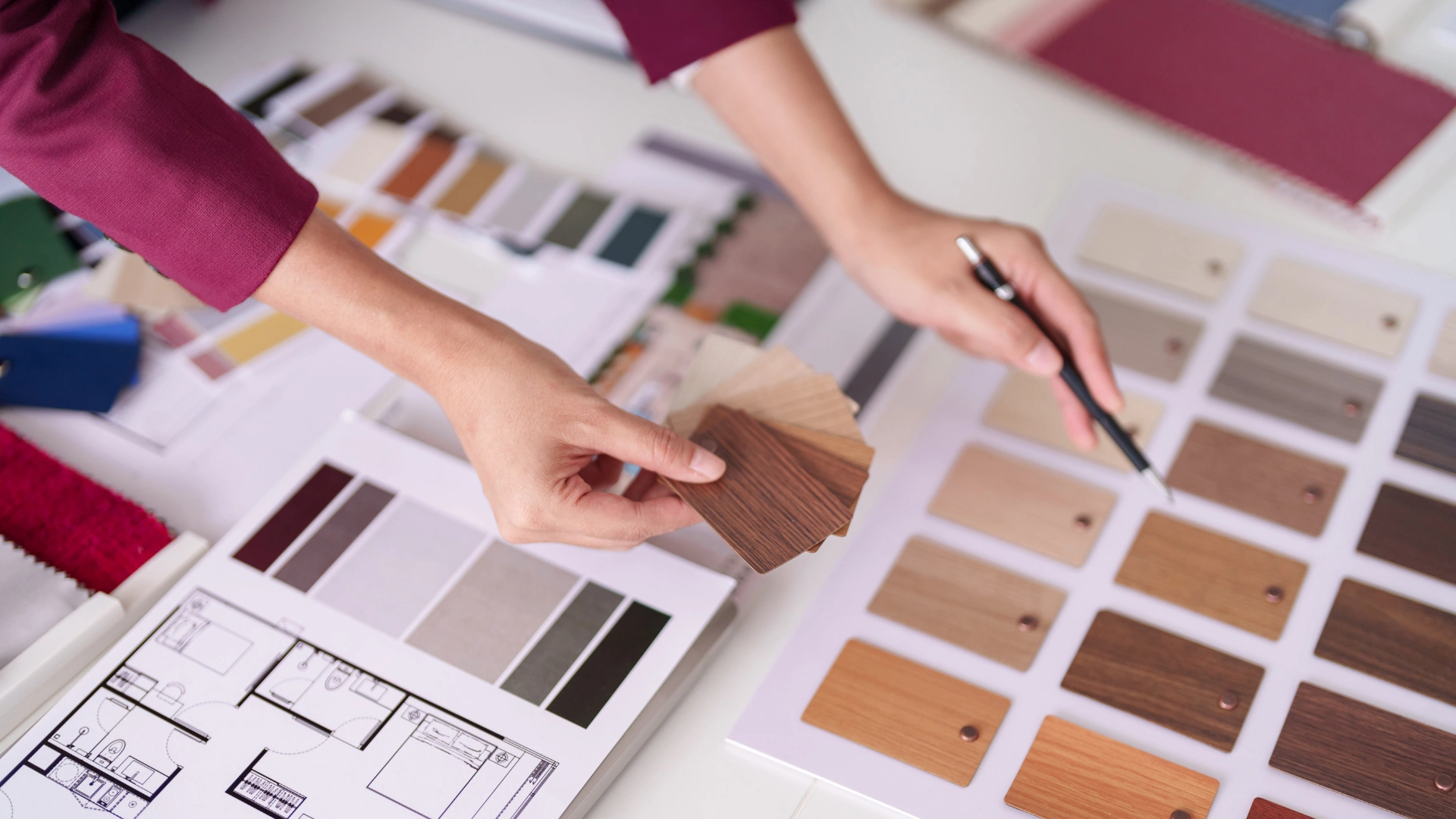
Regardless of the quality of interior materials and finishes you choose, proper maintenance is key to longevity.
- Laminates: Use a soft, damp cloth with mild soap. Avoid abrasive cleaners that can scratch the surface.
- Acrylic: Since it is a soft material, use micro-fiber cloths to prevent swirl marks and maintain that mirror-like shine.
- Veneers & Wood: Avoid excessive water. Periodic polishing with specialized wood oils will keep the grain looking fresh and vibrant.
- PU & Lacquer: These are very hardy but can be sensitive to sharp impacts. Wipe spills immediately to prevent any potential staining on matte surfaces.
Conclusion: Crafting Your Vision
Navigating the world of interior design finishes can be complex, but it is also one of the most rewarding parts of creating a home. The right materials do more than just “look good”—they improve your quality of life, increase your property value, and stand as a testament to your personal style.
Whether you are looking for a sleek contemporary finish or a warm traditional vibe, D2M Interiors is dedicated to helping you make the right choices. Our team understands the nuances of the local market and the technical requirements of the Chennai climate, ensuring that your home is as durable as it is beautiful.